Weather and time
Rain, snow and the turning day: what each one takes off your sight and your speed, and how to fight in it.
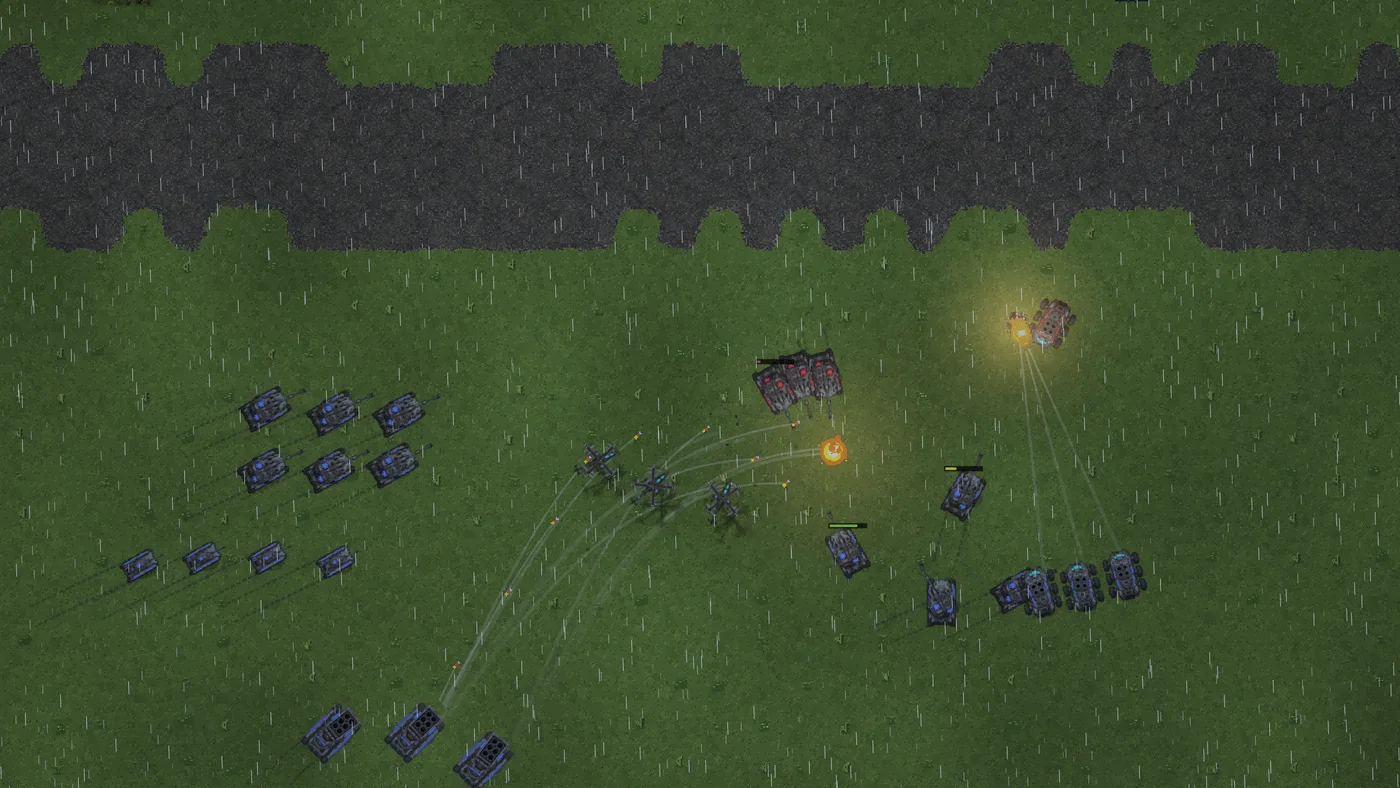
Two things sit over every battlefield, and they are independent of each other: the weather, which may be fixed or change during a Random match, and the hour, which may cycle or be held at a chosen time. It rains at night. They affect sight, and weather also changes movement speed, and both are simulated by whoever owns the match, so what you are looking at is what everyone is playing under.
The weather
| Weather | Sight | Speed on ground and water | What it is for |
|---|---|---|---|
| Clear | — | — | Nothing shrinks and nothing slows. |
| Rain | 0.75× | 0.85× | The two-handed one: less warning, and slower to answer it. |
| Snow | — | 0.75× | You see it coming as clearly as ever. That is the problem. |
| Random | — | — | The match writes its own forecast. See below. |
Aircraft keep their speed in any weather, but not their eyes or their aim. Under rain or snow an aircraft sees 0.7× on top of the weather's own sight dial, and its unguided bombs and rockets land 1.6× as wide. In rain that is 0.75 × 0.7 ≈ 0.53× sight; in snow, which costs the ground no sight at all, a pilot still sees only 0.7×. Guided missiles and gunfire land where they always did.
The day
A full cycle is 24 minutes of match time and a match starts at dawn: noon six minutes in, dusk at twelve, midnight at eighteen, dawn again at twenty-four. The light does not creep: a day is long flat middles with a fast turn between them, so most of a match is plainly day or plainly night and the twilights are short and amber.
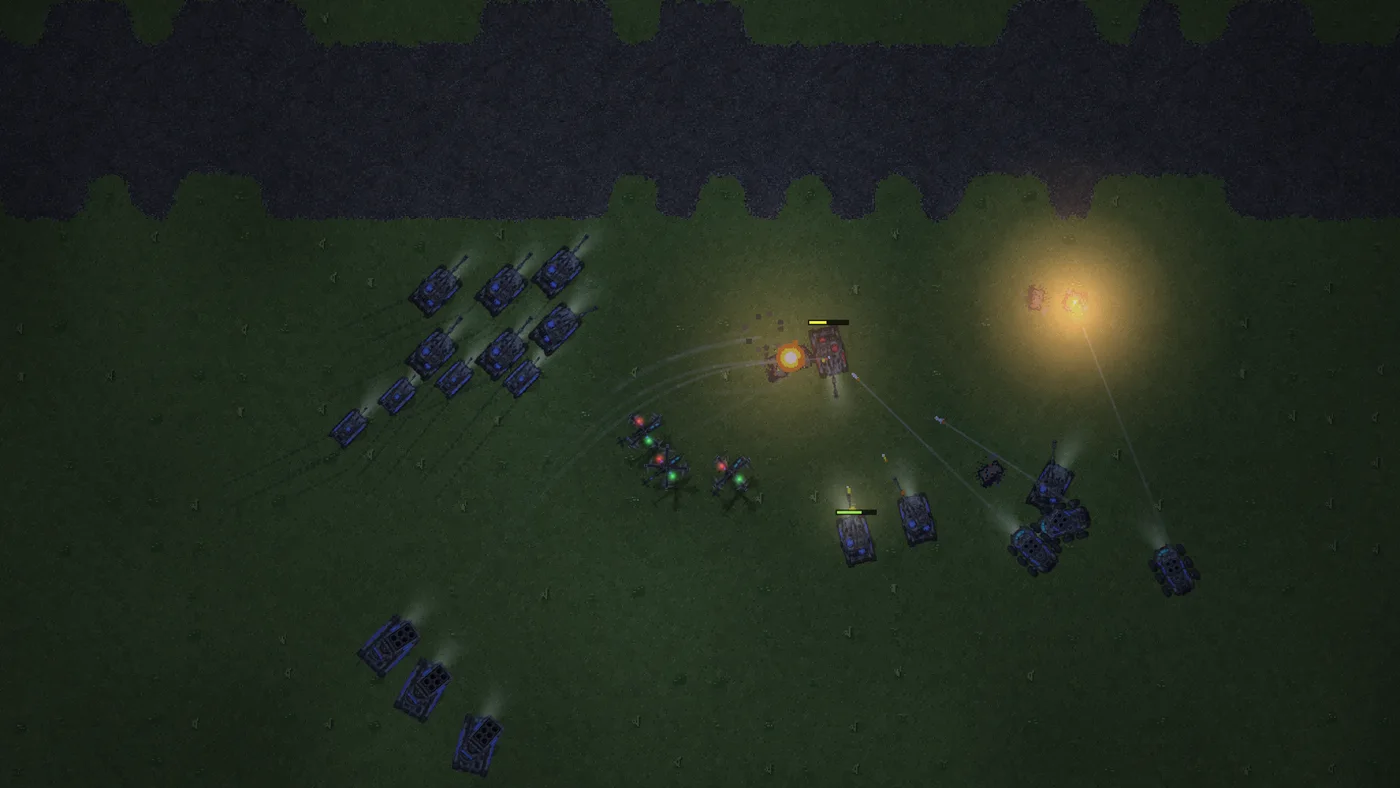
At the bottom of the night, units without radar see 0.6× what they see at noon.
The Time row in the lobby and local setup can run Day and night or hold an hour for the whole match. Conquest and Frontline default to Day and night. The fixed choices stop the sun rather than abolishing the hour, keeping their light and sight effects:
| Time | Sight | What it is |
|---|---|---|
| Day and night | 1× to 0.6× | The sun turns, 24 minutes to the cycle, starting at dawn. |
| Dawn | about 0.85× | First light, held: the amber sky of the opening minute, all match. |
| Noon | 1× | Unending daylight, and one less variable. |
| Midnight | 0.6× | The bottom of the night, all match; the weather stacks on top. |
What the numbers actually mean
- Sight is what you know, not what your guns reach. A tank in a downpour at midnight still shoots exactly as far as it always did. It just finds less to shoot at, and is found later itself. Nothing here touches weapon range.
- The Radar Station is exempt from both. It sees by radio, and neither the weather nor the hour has an opinion about that. On a dark or a wet map its circle has not shrunk, which is most of what the investment buys.
- Aircraft keep their speed. The slowdown is a ground condition, and that is what makes air the answer to a slow map. What the weather takes from a pilot is sight and aim instead (above).
- Weather arrives, it does not appear. A change takes about 25 seconds to cross the map, and the dials slide with the picture: you watch your vision close in as the rain comes in.
A random sky
Random is the default, and with it the match decides its own weather as it goes.
It opens clear, and turns every few minutes from there: a calm spell runs 4–9 minutes, a wet one 2–5, so the storms stay events rather than a map condition. The change arrives as a visible weather front over about 25 seconds, with sight and speed changing gradually alongside it.
Automatic weather uses one wet type and alternates it with clear, rather than switching between rain and snow. Which one it gets is read off the ground itself: at least 12% snow or ice tiles means snow. Below that threshold the wet spells are rain; a small patch of snow does not change the whole map’s forecast.
Fighting in it
- Scout more, or build radar. The first thing bad weather costs you is warning. A base that could see an attack forming at noon meets it at the wall at midnight.
- Snow is the one that punishes distance. You will see the attack coming from as far away as ever and your relief column will be a quarter slower getting there. Garrison forward, or hold air.
- Night favours the attacker. Shorter sight means a push is discovered later, and a defence that relies on reacting to what it sees has less time to react. Air raids and Wraith Stealth Bomber runs are worth more after dark.
- Rain is the raid window, on the ground. Sight and speed against the defender. The air arm pays too: under the cloud a pilot loses more sight than the tanks below and puts bombs and rockets down wider, so save the bombing run for a clear sky. In December 1944 the overcast over the Ardennes kept the Allied air forces out of the Battle of the Bulge for a week, until it lifted on the 23rd.
- On a random sky, watch the front. The arriving rain or snow is your warning that the ground is getting slower: a column that sets off in the clear can arrive in the snow.
Setting it
Both are rows in the game config pane, in the Conquest setup and in the multiplayer lobby, where the host owns them. In a match, the admin console moves both: weather clear|rain|snow and time dawn|noon|dusk|midnight (or a number of minutes into the cycle). Either with no argument reads the sky back instead of changing it.
time works whatever the Time row says. With the sun stopped it pins the sky wherever you put it, so time midnight on a match held at noon is a permanent night, sight penalty and all.
See Terrain for the other half of what the ground does to an army, and Conquest, Frontline and the Bots for the rest of the game config.
Last edited