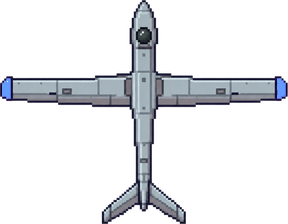
정찰 드론
비무장, 소모품, 모든 것을 봅니다.
상성
- 경장갑
- 효과적인 대상: —; 위협적인 상대: —
- 중형 장갑
- 효과적인 대상: —; 위협적인 상대: ×1.20
- 중장갑
- 효과적인 대상: —; 위협적인 상대: ×0.70
- 건물
- 효과적인 대상: —; 위협적인 상대: ×1
- 함선
- 효과적인 대상: —; 위협적인 상대: ×1
- 잠수함
- 효과적인 대상: —; 위협적인 상대: —
- 항공기
- 효과적인 대상: —; 위협적인 상대: ×1
The Scout Drone is unarmed and fast, and it sees far. It exists to see. Enemy guns take it last, firing on it only when nothing else is in their reach.
A hostile 베일 전자전 기지 blocks this remote surveillance inside its coverage. Direct observation by crewed units still reveals that ground; radar retains local optical sight, and sonar keeps working.
Quote
No spoken unit replies; this drone has no crew voice.
Trivia
-
Aerial reconnaissance began with pigeons. In 1907 a Bavarian apothecary strapped a timed miniature camera to a bird's chest and got the first photographs taken from the air by something that was not a person.
-
The Scout Drone and Hornet have no crew voice at all, including the shared pilot replies. Their camera feeds also share a weakness: hostile Veil coverage blocks the ground they would reveal.
-
On November 17, 2026, the Scout Drone was redesigned after the RQ-4 Global Hawk, the high-altitude reconnaissance drone whose bulbous nose houses its satellite antenna. Until then it was a small straight-winged drone with a sensor ball under its nose. It became a little larger, with the Global Hawk's long slender wing, the engine on its back and its V-tail; its cost rose from 40 to 70 metal and its hit points from 90 to 100.
마지막 수정